September took me from our annual business development meeting in Atlanta to InnoTrans in Berlin and then to the All Wheels Up Global Forum in Colorado Springs. Although those trips focused on different aspects of the transportation industry, one idea connected them all – meaningful innovation begins by considering the entire customer experience.
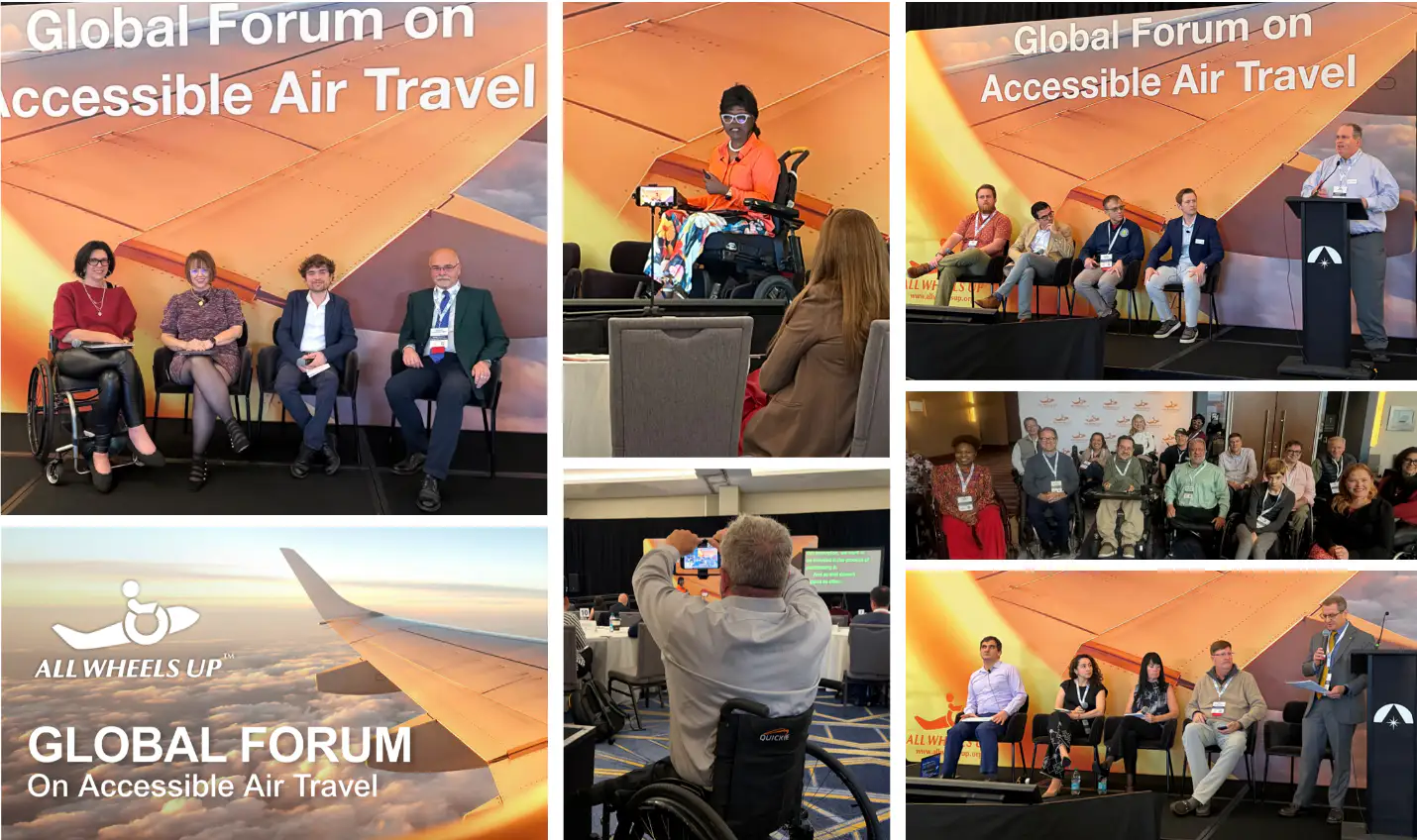
One of the most important developments discussed at the All Wheels Up Global Forum was the growing viability of accommodating a passenger in their own power wheelchair aboard a commercial aircraft. Roberto Castiglioni MBE, director of Reduced Mobility Rights, captured the wider significance of that work when he said, “Accessibility is a universal core value, as it ultimately affects all of us.” Whether through disability, injury, or aging, nearly everyone will encounter accessibility needs at some point in their lives. Last year’s forum, hosted by Microsoft, highlighted how many innovations initially developed for people with disabilities have gone on to benefit everyone.
This year’s forum made clear just how far the industry has come in AWU’s 15-year history. An FAA representative explained that enough data and an installation path exist for an airline to pursue an in-cabin wheelchair project; what is needed now is a carrier willing to take the lead.
The engineering challenge increasingly appears achievable, but delivering a safe, dignified, and dependable experience will require careful planning across the complete journey – from booking and airport arrival through boarding and inflight service to arrival at the destination. The first airline to do this well can build enormous goodwill within the wheelchair community and help chart the path toward truly inclusive air travel – ideally before regulation requires it.
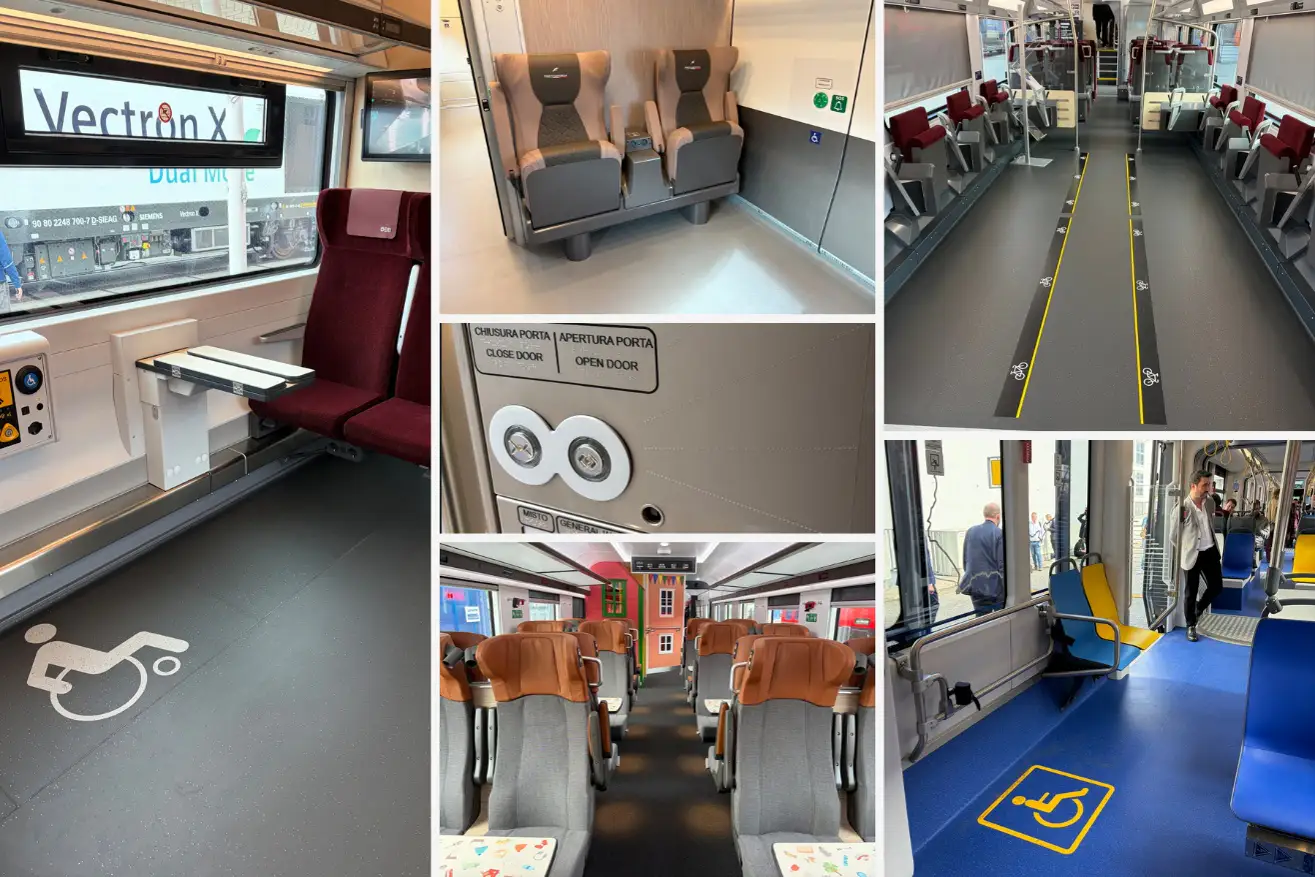
That thought stayed with me as I reflected on my week at InnoTrans. On board train after train, I encountered wheelchair-accessible spaces successfully integrated into the passenger environment. Alongside sustainability and night trains, accommodating a wider range of passenger needs continues to be an important focus for the rail industry. Operators and OEMs are considering wheelchair users and their companions, blind and hard-of-hearing passengers, families traveling with small children, and cyclists bringing bicycles aboard. The comparison reinforced a simple point: accessibility is not one feature or one designated location. It is a journey that begins before guests arrive and continues until they reach their destination.
Perhaps that is why one line from the International Design Forum resonated so strongly with me. During his How to Buy a Train presentation, Christian Harbeke of nose design urged the audience to “Design the train before the tender.” It sounds obvious when read here, but the discussion made clear that this has not always been the way rail programs are approached. Starting early also means getting educated early – before heading down the path of deciding what you need.
I regularly encourage customers to explore what they want to achieve and understand how materials, manufacturing, and design can support that vision before defining the program too narrowly. The more you understand the possibilities at the outset, the better equipped you are to ask the right questions and make decisions that support the customer experience you want to create.

This was my second InnoTrans, and I arrived much better prepared to tackle the enormity of the trade fair than I had two years prior! In all honesty, the scale of the event is difficult to convey. At the Aircraft Interiors Expo in Hamburg, my airline role once took me through halls devoted not only to aircraft interiors, but also to inflight entertainment and the full range of dining and cabin-service products. InnoTrans feels even more expansive, with seemingly everything required to design, build, maintain, and operate a comprehensive rail system. Navigating the maze of halls out to the tracks beside Messe Berlin and finding my way back to our tiny but mighty stand proved challenging. But experiencing the full trains that operators and OEMs brought to the show made the miles logged on my Apple Watch well worthwhile.

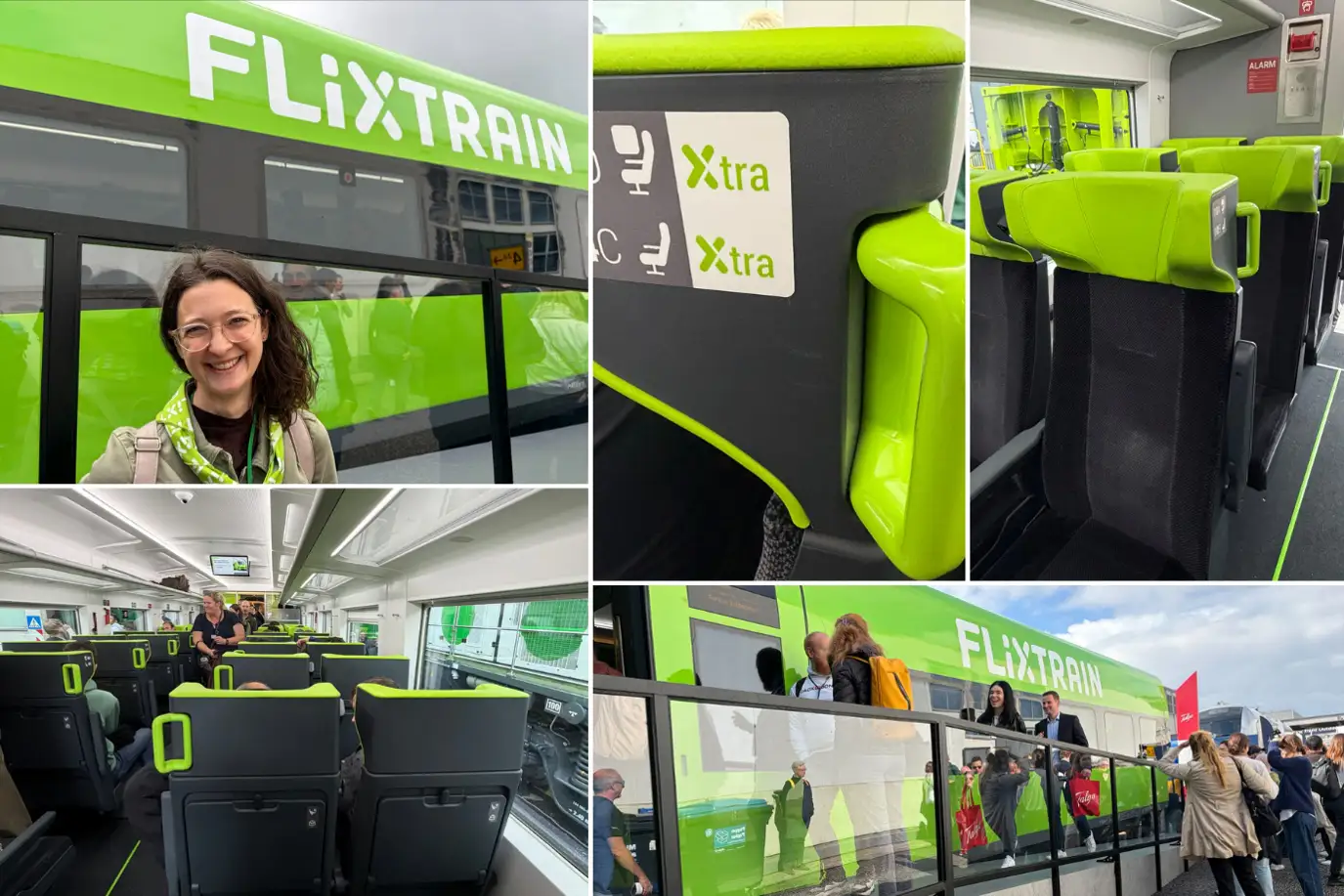
I went to InnoTrans armed with a list of trains I wanted to see and then asked nearly everyone I met what I should not miss. Norske tog consistently received high marks, and after boarding the Norwegian train, I understood why. The interior showed clear attention to detail and stellar craftsmanship throughout. Several people also pointed me toward the CRRC VELLINK train with its unusual circular front window. FlixTrain’s new rail car, which I visited with Caterina Guerra, Senior Manager – Product Development at FlixTrain, offered a bright, budget-friendly perspective, complete with new rail seating by Recaro. Each train expressed a different identity yet showed a clear focus on how passengers would actually use the space.

Night trains, adaptable interiors, and sustainability were recurring themes across the show. At the SEKISUI KYDEX stand, we were delighted to support PriestmanGoode in introducing their innovative DAY/DREAM concept, which transforms existing rolling stock from daytime seating and lounge space into overnight sleeping accommodations without requiring a dedicated sleeper fleet.

Elsewhere at the show, I previewed the interior of the NOX Mobility train with my friends from N+P Innovation Design before it opened to the public the following day. Separately, I toured the Luna Rail train and experienced their unusual “below deck” configurations firsthand. These very different approaches reinforced the tremendous opportunity to bring experienced rail designers, operators, and material specialists together early, where their combined expertise can transform concepts into lighter-weight, more refined, passenger-focused solutions. Lightweighting is becoming increasingly important as the rail industry embraces sustainability and using thermoplastics in lieu of fiberglass is worth considering.

From Milani Design’s quickly completed refurbishment of Rigi Bahn’s tailor-made mountain train to TRICON’s large-scale, adaptable ALISA solutions, the work presented at the International Design Forum reinforced that there is no single formula for a successful train interior; the right solution must reflect the operator’s service, guests, and vision.

One of the best parts of InnoTrans is the chance to experience those decisions firsthand. I tried to board Hitachi’s Frecciarossa train earlier in the week, but arrived during a private tour. When I returned late Friday, the crowds had thinned, and I was able to appreciate an aesthetic very different from Norske tog’s yet executed with equal attention to detail.

The highlight of the show came when I practically bumped into a senior engineer from an operator I have been calling on for several years. We toured the high-end Italian interior together, with my guide enthusiastically pointing out thoughtful details I would have missed on my own. Seeing the train through the eyes of someone who understood both its design and the demands of daily service brought the entire week into focus. The best transportation design connects every part of the journey – guest needs, crew operations, engineering, materials, and the realities of daily service.
Before we parted ways, the engineer encouraged me to take another look at the ÖBB trains and compare the two – one built by Siemens Mobility and the other by Stadler. Unaware of that interesting aspect, I had previously toured only one, so I went back. By then, the crowds had thinned out, and I had these beautiful Austrian trains all to myself. What a splendid way to wrap up the show!

That was the thread running through my September travels, from the future possibility of remaining in one’s wheelchair aboard an aircraft to the accessible spaces, adaptable interiors and thoughtful details I experienced on trains at InnoTrans 2026. Aviation and rail may face different constraints, but both have much to gain by designing the complete journey early – and by listening closely to the passengers on whom both industries ultimately depend.
I look forward to continuing these conversations at the upcoming RedCabin Rail Summit, hosted by Alstom in Valenciennes, France, and the RedCabin Aviation Summit, hosted by Boom Supersonic in Denver, Colorado. If you plan to attend either summit, please let me know. I hope to see you there!