Understanding E CMC Color Tolerance
CMC Color Tolerance
CMC is not a color space but a color tolerance represented by a single numerical value, E. CMC is based on CIELCH where L is lightness, C is chroma, and H is hue.
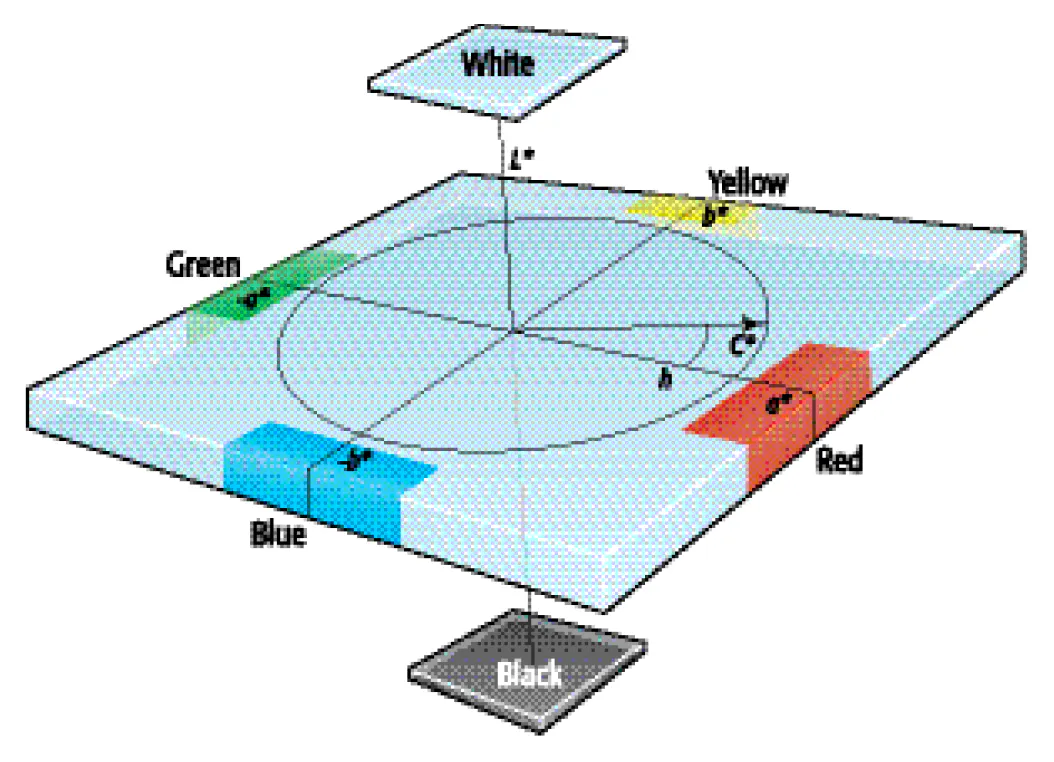
Figure 1 Coordinates of color space (Eye-Color, 2002)
The CMC calculation defines an ellipsoid around the standard color while the volume of the ellipsoid represents acceptable color variation. The size and shape of the ellipsoid automatically varies depending on the location in color space. Colors in the orange area of color space are more sensitive to shifts in hue, which result in narrower ellipsoids, while colors in the green area of color space have broader ellipsoids due to their low sensitivity to hue. Additionally, lightness will decrease hue and chroma tolerances as it increases or decreases from standard.
Tolerance ellipsoides are tightly packed in the orange region.

Green Red Tolerance ellipsoides are larger in the green region.
Figures 2 + 3 CMC tolerance of color space (X-Rite, 2000) Blue

CMC vs CIELAB Color Tolerance
CIELAB color tolerance is defined by the change in color space on the L, a, and b axes where L is lightness, a is red/ green, and b is yellow/blue. Limits placed on the L, a, and b create a rectangular tolerance box around the color standard. This evenly segments color space into grids and assumes change in appearance is uniform throughout color space.


CMC vs CIELAB Color Tolerance
The Human Observer and Visual Perception The human eye does not detect color differences in hue, chroma, or lightness equally. Various conditions including viewing conditions, eye fatigue, color blindness, and color memory can all affect the eye’s ability to distinguish color differences. On average, the observer will recognize differences in the hue first, chroma second, and lightness third. The resulting visual acceptability from the eye’s ability to distinguish color is best represented by an ellipsoid.

While no color tolerance system is perfect, the ellipsoid tolerance of CMC best represents the differences observed by our eyes. Research has shown that CMC tolerance has a 95% agreement with visual assessment while CIELAB has a 75% agreement. (X-Rite, 2002) Based on the higher degree of agreement, SEKISUI KYDEX utilizes CMC tolerance to inspect the color of its thermoplastic sheet products.
References
Eye-Color. (2002). Color Spaces, CIELab_65percent.jpg retrieved online February 24, 2003, at http://www.i1color.com/knowledge/measuring_color.asp
X-Rite. (2000). A Guide to Understanding Color Communication.
Because we cannot anticipate or control the many different conditions under which this information and our products may be used, we do not guarantee the applicability of the accuracy of this information or the suitability of our products in any given situation. Users should conduct their own tests to determine the suitability of each product for their particular purposes. Data in the physical property table represents typical values and are to serve only as a guide for engineering design. Results are obtained from specimens under ideal laboratory conditions. Right to change physical properties as a result of technical progress is reserved. THE PRODUCTS DISCUSSED ARE SOLD WITHOUT WARRANTY OF MERCHANTABILITY OR FITNESS FOR A PARTICULAR USE, EITHER EXPRESSED OR IMPLIED, EXCEPT AS PROVIDED IN OUR STANDARD TERMS AND CONDITIONS OF SALE. Buyer assumes all responsibility for loss or damage arising from the handling and use of our products, whether done in accordance with directions or not. In no event shall the supplier or the manufacturer be liable for incidental or consequential damages. Also, statements concerning the possible use of our products are not intended as recommendations to use our products in the infringement of any patent. Consult local code and regulatory agencies for specific requirements regarding code compliance, transporting, processing, recycling and disposal of our product. Product not intended for use as a heat resistant surface. Texture, product grade and other conditions may cause variations in appearance.
This information supersedes all previously published data.